
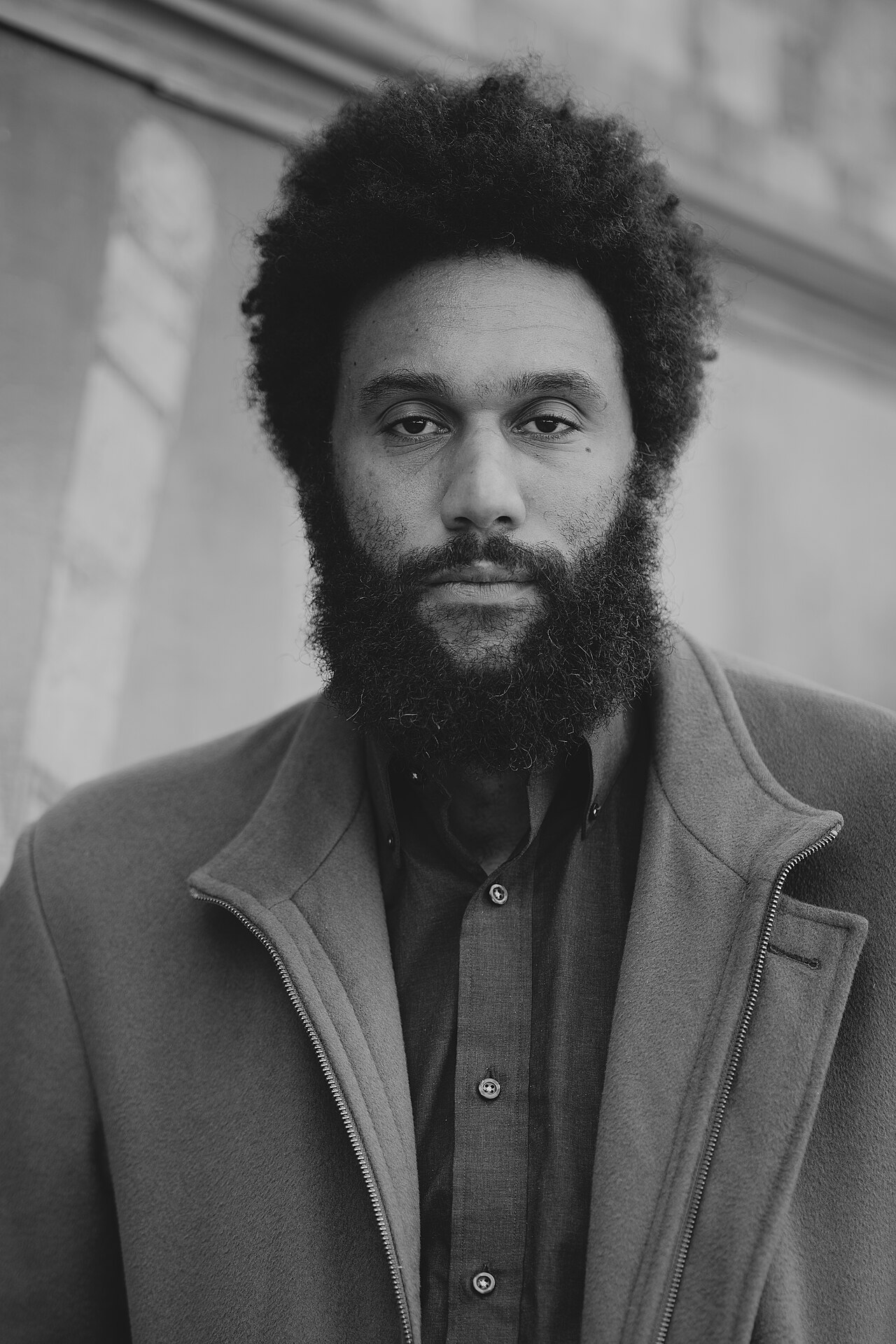
One of my favorite California poets, Tongo Eisen-Martin, will read in Davis this Friday, October 23, at 7:30 p.m. at the John Natsoulas Gallery as part of the Jazz Beat Festival. I hope you’ll join us.
I’ve heard Tongo read perhaps half a dozen times in San Francisco, where he served as poet laureate, and I’ve hosted him via Zoom for my Poetry Night reading series. His combination of musical invention, political commitment, and startling language keeps drawing me back. Friday brings a rare opportunity to hear him here in Davis.
Tongo’s work earns admiration across a remarkable range of readers and listeners. Prize juries, newspaper critics, and fellow poets praise him alongside the community organizers, teachers, and incarcerated students he has worked with. That breadth of connection interests me. His poems travel through classrooms, literary festivals, and organizing spaces, inviting people to listen closely and reconsider the world around them.
Here are five reasons I look forward to hearing him again.
1. The jazz in his lines
People often reach for musical comparisons when describing Tongo’s poetry. KQED Arts heard “a sublime cadence in Eisen-Martin’s work that is polyphonic, gritty, and unexpectedly fragile, like jazz.” Terrance Hayes praised his “swinging type body language,” while Cultural Weekly called him “a poetic Jimi Hendrix on the page and the stage.”
Those comparisons capture the interplay of freedom and control in his work. His language invites us to follow a phrase through unexpected turns, to hear how one thought opens into another. For a reading during the Jazz Beat Festival, that musical imagination promises a particularly fitting encounter.
2. Poems that summon a voice
Chinaka Hodge wrote that Tongo’s poems “beg to be read aloud, to be pronounced as spells and incantations.” Claudia Rankine called his poetry “resistance as sound.”
I appreciate the emphasis both poets place on sound. A live reading gives us the poet’s breath, timing, and emphasis. We hear where he pauses, which words he presses, and how a line gathers force.
Tongo has also brought poetry into conversation with percussion and video. In 2022, San Francisco’s Magic Theatre opened its Poetry Program with Black Fire, a performance combining his poetry with percussion by Ahkeel Mestayer and video. That year he also released his debut spoken-word album, I Go to the Railroad Track and Follow Them to the Station of My Enemies.
If you have a few minutes before Friday, listen to some of his work online.
3. Recognition across the literary world
Tongo’s Heaven Is All Goodbyes (2017) won the American Book Award, the California Book Award, and the PEN Oakland Award, and reached the shortlist for the international Griffin Poetry Prize. The Griffin judges called it “equally a work of commitment and of wonder.”
His next collection, Blood on the Fog (2021), won California’s independent booksellers’ Golden Poppy Award and reached the finals for the California Book Award. Elisa Gabbert included it among the New York Times’ best poetry books of 2021. In 2024, the Academy of American Poets awarded him a Laureate Fellowship.
These honors suggest how widely his poems resonate among people who spend their lives reading, teaching, and recommending poetry.
4. Politics that animate the poems
Tongo calls himself a “movement worker.” His poetry confronts state violence, police brutality, the prison industrial complex, and the forces that shape life in American cities. His curriculum We Charge Genocide Again!, which addresses the extrajudicial killing of Black people, has circulated among teachers and organizers across the country.
That work connects the poet’s attention to the responsibilities of teaching and organizing. Whose experience shapes our understanding of a city or a country? What can language reveal about the arrangements we live within?
Michael Robbins, writing in the Chicago Tribune, described Tongo as “singing in dark times about dark times.” I want to hear a poet who brings such imaginative force to these dark times. I’m grateful we’ll have that chance Friday.
5. A teacher’s invitation to find your voice
When Tongo spoke on a panel about poetry, inspiration, and sustainability at the San Francisco Writers Conference in 2023, I tried to record his insights as quickly as he shared them.
My notes return repeatedly to voice, attention, and the practice of writing. The observations below come from those notes; some may condense his phrasing.
On finding your voice:
- The only journey of the poet is the journey towards your voice. Your voice is your birthright.
- The more specific you are on the page the more specifically you are being yourself.
On attending to your own experience:
- This conversation I’m having with my grandmother has as much to say about reality as what the voice of the hegemony has prescribed.
- See how best you can excavate your slice of reality.
On following the work:
- Keep moving the pencil until something real happens.
- The poem of the ages begins before you pick up the pen.
- Sonny Rollins said that his tactic as a soloist is to start with a cliché and then walk towards his subconscious with it.
- We don’t plan our night’s dreams.
The Sonny Rollins observation brings us back to jazz. Begin with something available, even familiar, and follow it toward discovery.
Which of these observations speaks to your own writing or reading? Let me know.
And I hope you’ll join us to hear the voice behind them. Tongo Eisen-Martin reads this Friday, October 23, at 7:30 p.m. at the John Natsoulas Gallery in Davis, as part of the Jazz Beat Festival. After hearing him half a dozen times, I’m eager for another evening in his company. Come join us.
Thank goodness the rain has arrived, though I don’t think it will rain on our quiz tonight. Still, join us for the pub quiz tonight, won’t you? Last week we had more than 30 teams, which is a lot, so come early to grab a table (or call ahead for a reservation.) Also, take heed that the the quiz is longer this week (over 1000 words), so you will learn so much. I’m also grateful for that.
In addition to topics raised above, tonight’s pub quiz will feature questions on, Actresses, Anagrams, Animations, Archipelagos, Athletes, Ballparks, Bands, Battles, Calendars, Careers, Charities, Comedians, Composers, Consoles, Countries, Courtrooms, Critics, Documentaries, Elements, Etymologies, Filmmakers, Gamers, Generals, Grammys, Gyms, Injuries, Isthmuses, Mammals, Marchers, Measurements, Meditations, Memberships, Muscles, Nations, Novelists, Palaces, Photographers, Photographs, Pianists, Playwrights, Poets, Politicians, Protests, Provinces, Rappers, Revolutions, Saxophonists, Singers, Streamers, Studios, Thrillers, Treaties, Trumpeters, Tundras, Vaccines, Vocabularies, Waterfalls, Weapons, Workouts, current events, books and authors, and Shakespeare.
Thanks to all the patrons who have been enjoying fresh Pub Quiz content. Thanks especially to new subscribers Janet, Jasmine, Joey, Carly, and The Nevergiveruppers! Every week I check the Patreon to see if there is someone new to thank. I also thank The Original Vincibles, Summer Brains, The Outside Agitators, John Poirier’s team Quizimodo, Gena Harper, the conversationally entertaining dinner companions The Mavens who keep attending, despite their ambitious travel schedules and the cost of avocado. Thanks to everyone who supports the Pub Quiz on Patreon. I would love to add your name or that of your team to the list of pub quiz boosters. I appreciate your backing this pub quiz project of mine!
Best,
Dr. Andy
Three questions from last week:
- Mottos and Slogans. Starbucks has explored taking over a restaurant chain that has used the slogan “Food with Integrity.” Hint: The chain’s name comes from the Nahuatl name for a smoked and dried jalapeño chili pepper. Name the restaurant chain.
- Internet Culture. Featuring the now-wife of Harrison Ford, which late-1990s TV legal drama gave the early viral “Dancing Baby” animation a recurring role as the main character’s hallucination? Ally McBeal, starring
- Newspaper Headlines. The 2026 Nobel Peace Prize went to Navi Pillay, a former UN High Commissioner for Human Rights who also served as a judge on the international tribunal for Rwanda. What country is she from?